Docks and Accessories Clothing
Electronics*
Exterior upgrades
Featured Posts
Featured Posts 2025
Gear*
Interior Upgrades
Life Style *
Products*
Latest News
Express Post
Life Style





Gear
-
 Docks and Accessories Clothing Electronics* Exterior upgrades Featured Posts Featured Posts 2025 Gear* Interior Upgrades Life Style * Products*
The 10 Must-Have Powerboat Gear Items of 2026
From AI systems that dock your boat for you to fuel sensors that can save your engine mid-run, this year’s crop of powerboat gear is the smartest, most connected — and most genuinely useful — the industry has ever produced. Here are the ten items earning their spot on the water this season.
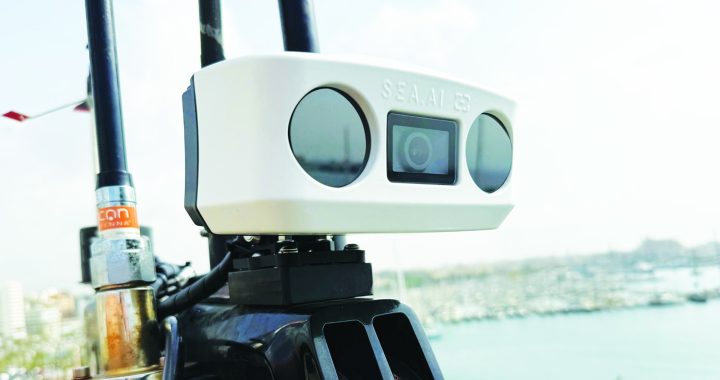
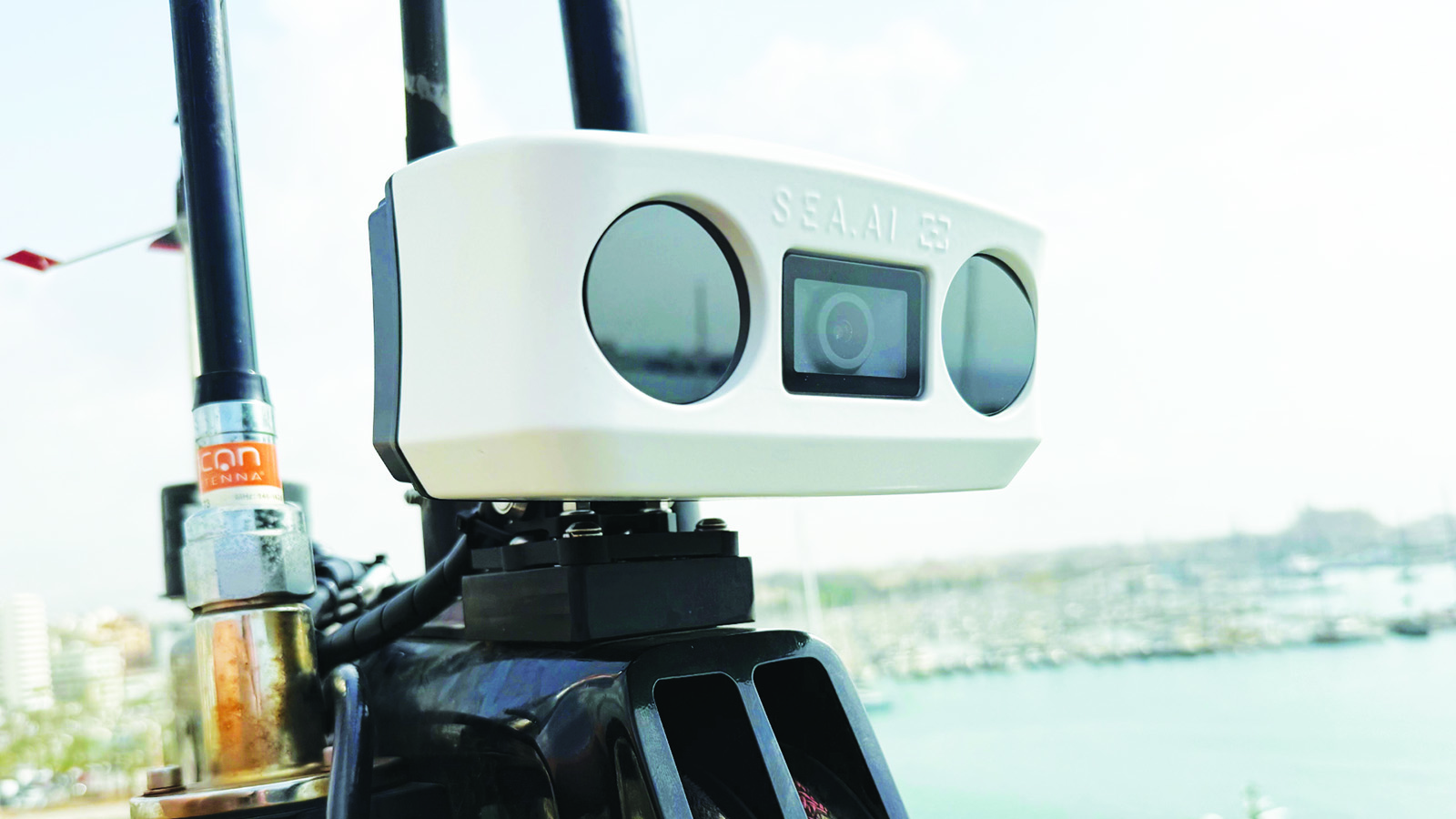 SEA.AI WATCHKEEPER
AI Collision AvoidanceRadar catches most of what’s out there — but not the half-submerged container, the unlit dinghy, or the swimmer just beyond the bow wake. SEA.AI’s Watchkeeper fills that gap with a continuously running AI that draws on a proprietary database of millions of annotated marine objects to detect and classify hazards your instruments might miss. The system — derived from SEA.AI’s OSCAR technology, proven in IMOCA offshore racing
— processes real-time data from ultra-wide 4K low-light cameras and, on higher-tier configurations, long-wave infrared thermal imaging. When a threat is flagged, escalating audible alarms fire alongside on-screen alerts on compatible MFDs and smartphones. Available in seven configurations to suit everything from a 25-foot centre console to a 60-foot express cruiser, Watchkeeper makes 24-hour situational awareness affordable for the first time. Entry-level pricing starts at $4,990 USD; thermal configurations run to just under $26,000. Software subscriptions apply after year one. For more information, visit www.sea.ai.
 SIMRAD AUTOCAPTAIN
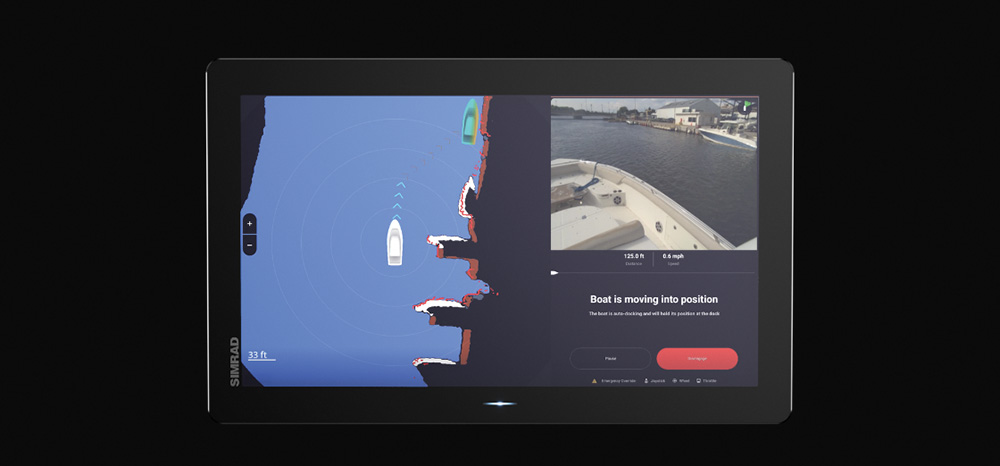
Autonomous Docking SystemPicture the most white-knuckle moment of any day on the water: pulling into a crowded marina with a crosswind pushing hard off the dock. Now picture the boat doing it for you. Simrad’s AutoCaptain — three years in development and the centrepiece of Brunswick’s ACES strategy — is the first commercially available system to deliver true autonomous docking, undocking, and short-distance marina maneuvering. Working through six 3D stereo cameras mounted around the boat’s perimeter and tight integration with Mercury Marine propulsion and joystick controls, the skipper simply taps the Simrad display to mark the berth, presses the autodock button, and lets the system handle it. AutoCaptain compensates in real time for wind, current, and above-water obstacles like pilings, docks, and passing vessels. The skipper remains in full command and can override at any moment, and the system is honest about its limits — it does not detect shallow water or submerged hazards. Currently factory-integrated into the Boston Whaler 405 Conquest (adding approximately $120,000 CAD to the build), with broader OEM rollout to follow. For more information, visit
www.simrad-yachting.com.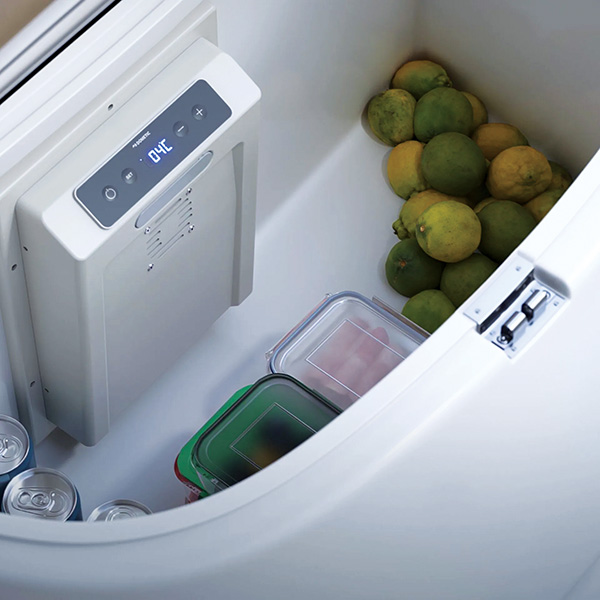 DOMETIC CSX SERIES
Cold Machine RefrigerationEvery boat built in the last decade has unused insulated spaces going to waste — a fish box that only gets used twice a season, a storage locker too awkward for provisions, a compartment the builder left blank. Dometic’s CSX Series Cold Machine turns any of them into a fully functioning refrigerator or freezer without complicated installation. Everything that normally has to be plumbed in separately — compressor, fan-cooled evaporator, digital controls, automatic defrost — comes sealed into one drop-in box that bolts to a wall, so there’s no remote compressor hiding somewhere else in the boat and nothing to charge with refrigerant on site. The refrigerant itself is the low-GWP R1234yf, which keeps the unit compliant as regulations tighten elsewhere in the industry, and Dometic puts the power draw at roughly 15 percent below comparable units on the market. The lineup spans 60L to 400L: the CSX200 and CSX400 run as straight refrigeration, while the CSX150FZ is built to hold a hard freeze. It took home the 2025 IBEX Innovation Award and retails at $999 USD. For more information, visit www.dometic.com.
GARMIN ONBOARD
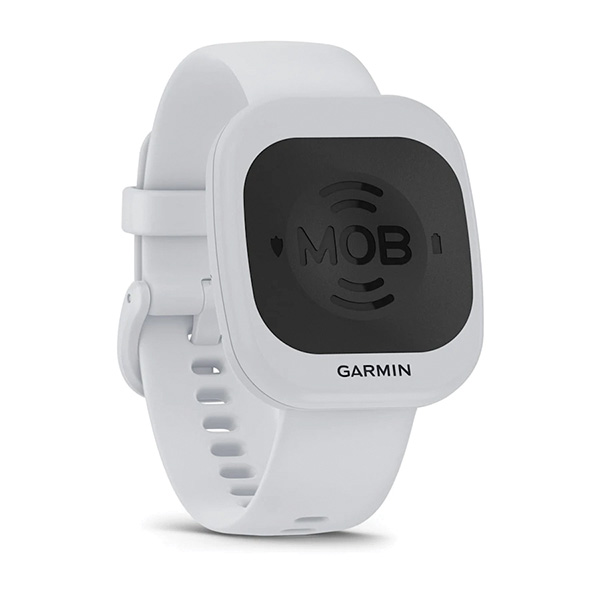
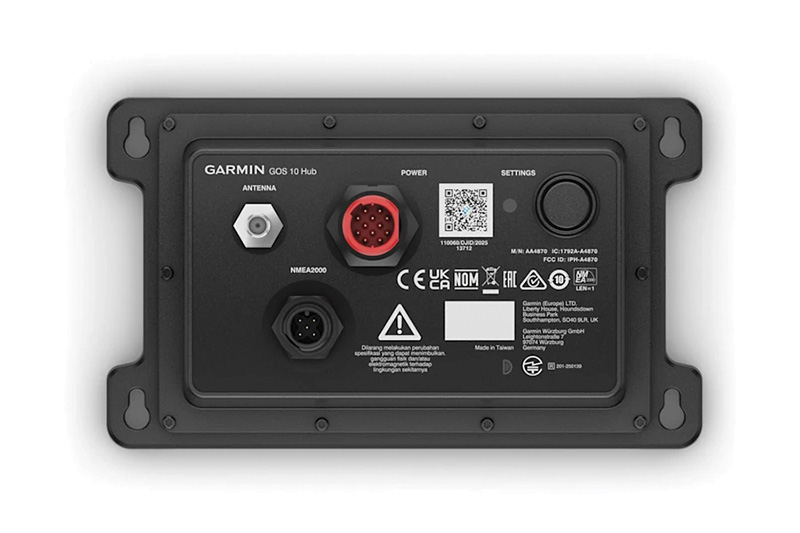
Wireless MOB & Engine CutoffThe traditional engine cut-off lanyard has one well-known failure mode: someone wanders too far from the helm mid-run and kills the engine by accident. Garmin’s OnBoard fixes that by ditching the cord entirely. Small waterproof transmitters — clippable to a belt, a wrist, or a life jacket — pair wirelessly with a compatible ECHOMAP or GPSMAP chartplotter, with each one assigned a role before the boat ever leaves the dock. Tag the captain, and an overboard event triggers everything at once: engines cut, a position drops onto the chart, and an alarm sounds, all without anyone touching a button. Tag a passenger or a kid instead, and the same alarm and waypoint fire, but the engines keep running so the boat stays maneuverable for the rescue. Up to eight tags can run at once, which covers a full crew (and the family dog, if it ever decides to test the theory). Garmin built in a swim-mode override so the tags don’t trigger a false alarm every time someone jumps off the bow for a midday dip. The system satisfies the federal Engine Cutoff Link requirement on its own, no separate lanyard needed, and it took home the 2025 DAME Design Award for Safety and Security. Retail runs $499.99 USD, with extra tags at $149.99 each. For more information, visit www.garmin.com/marine.
 WIF-PRO
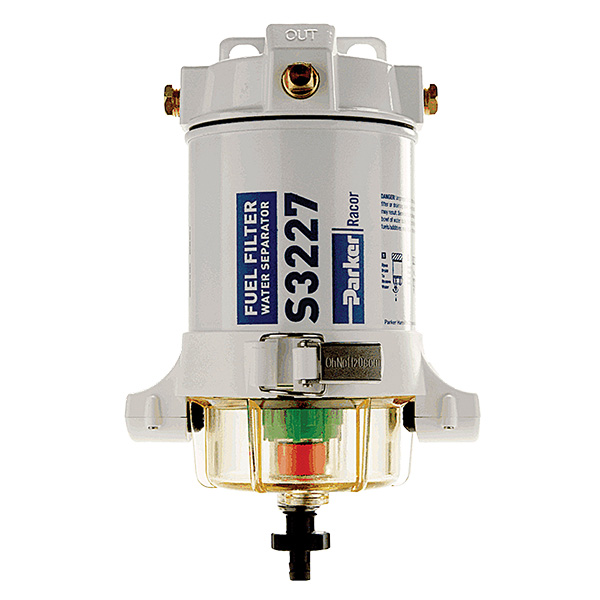
Water-in-fuel Detection SystemWater-contaminated fuel is one of the most common and most preventable causes of engine failure on the water. Your water-separating filter handles it beautifully — right up until the bowl fills, at which point
contaminated fuel flows straight through to your engine. The WIF-Pro, a double IBEX Innovation Award winner, gets ahead of that moment with a patented float-and-sensor ring that clamps onto the outside of a Parker/Racor clearbowl filter — Spin-On series for gas outboards, Turbine series for diesel. Nothing sits inside the fuel path, so there’s no wear part to foul or replace. Once the float crosses the threshold for unsafe water accumulation, the control panel lights up its LEDs and fires a 95-decibel alarm — loud enough to register over engine noise — — for boats running an active NMEA network — the same warning pops up on the chartplotter without any extra wiring. The system selftests automatically, and a built-in drip-free drain bottle means clearing the bowl doesn’t turn into a fuel-soaked mess on the dock. Backed by a three-year manufacturer’s warranty, it’s the kind of unglamorous upgrade that earns its
keep the one time it actually matters. For more information, visit www.wifpro.com.
 LXNAV MARINE E360
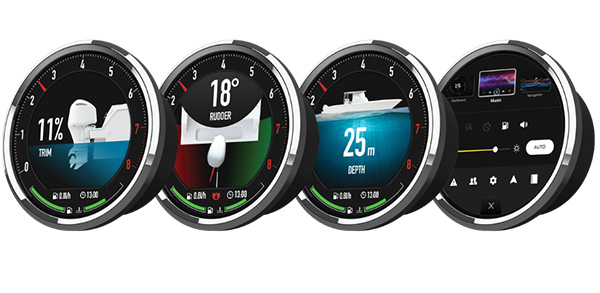
All-in-One ChartplotterSlovenia continues to punch well above its weight in marine electronics, and the LXNAV Marine E360 is the latest evidence. Designed as a compact, all-in-one console solution for smaller powerboats and RIBs — as well as high-end retrofits to classic designs — the round 4-inch touchscreen replaces a cluster of separate gauges with one display that reads everything flowing across the boat’s NMEA 2000 network: engine data, tank levels, depth, the works. Charting comes baked in at no extra cost — OpenSeaMap loads straight out of the box — and owners who need finer detail for a specific cruising ground can drop in an SD card running Navionics instead. Boats already wired for Fusion audio get playback control from the same screen, no separate stereo head unit required. For roughwater operation where a touchscreen becomes unreliable, an optional jog wheel controller (roughly €300) lets the skipper scroll and select with one hand without looking down — a detail that matters more than it sounds the first time someone tries to tap a touchscreen at speed on a small RIB. The clean, automotive-influenced interface puts it in strong competition with significantly larger brands at a fraction of the typical installed price. For more information, visit
www.lxnav.com.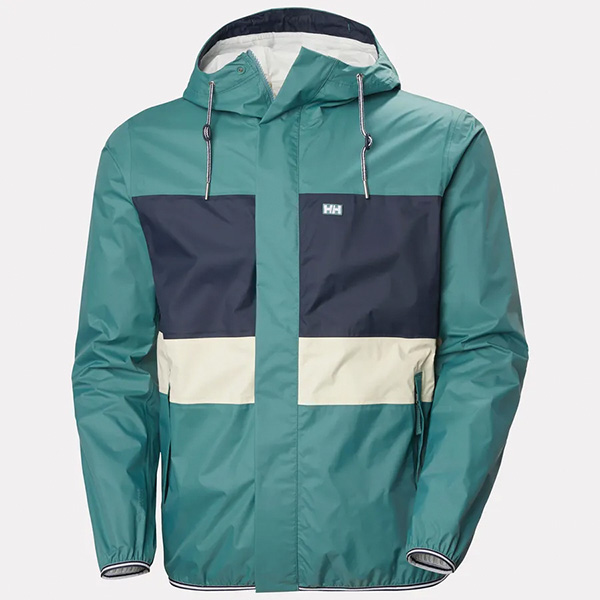 HELLY HANSEN KOSTER 2.5L JACKET
Spring 2026 Marine CollectionThe gap between stylish and genuinely protective has never been narrower than in Helly Hansen’s Spring 2026 marine lineup. The flagship Koster 2.5L Jacket is built around HELLY TECH Performance fabric, which does the unglamorous job of keeping rain out without trapping heat against the skin during a hard sprint to the fenders. Wind cuts through most of what passes for a “marine jacket” at this price point; the Koster’s cinch-down hood and sealed cuffs are specifically tuned to handle a stiff crosswind off the bow during an early-season run on Georgian Bay or a fast crossing of Lake Ontario. The detail most owners won’t notice until year three is the front zip, which is replaceable on its own rather than forcing a full jacket replacement the moment it fails — a small fix for a problem that quietly ends the life of a lot of otherwise-good rain shells. The shell fabric itself runs on recycled material, giving the line a sustainability angle most marine outerwear still skips. The collection positions itself squarely between hardcore offshore foul weather gear and the kind of jacket you’d actually wear walking the docks — a range that suits the majority of Canadian powerboaters who need weather protection without the bulk of a full survival suit. Available Spring 2026. For more information, visit www.hellyhansen.com.
 THE CAPTAIN
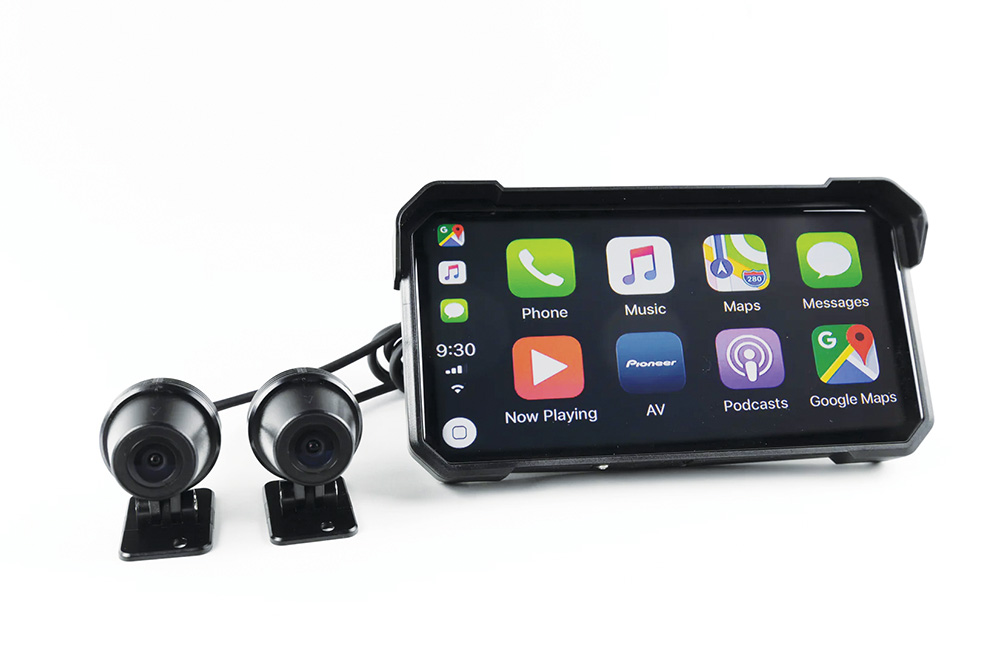
Aftermarket Marine Camera SystemEven on a 24-footer, there are angles a single operator can’t cover alone — the swim platform when kids are in the water, the blind spot off the stern quarter, the trailer rollers during a solo launch. The Captain pairs two flexible HD cameras (mountable in virtually any position or direction) with a waterproof seven-inch HD touchscreen at the helm and automatic DVR recording running in the background. The display syncs with most smartphones via a standard pairing process, freeing the skipper to keep both hands on the wheel while managing navigation, music, or messaging from the helm screen. Low-light performance keeps the cameras useful well past sunset, and the 12-volt power supply means it drops into any boat without rewiring. At $699.99 USD, it’s one of the most accessible upgrades on this list. For more information, visit www.thecaptaincam.com.
 MASTERCRAFT SOUNDSTAGE BY MERIDIAN
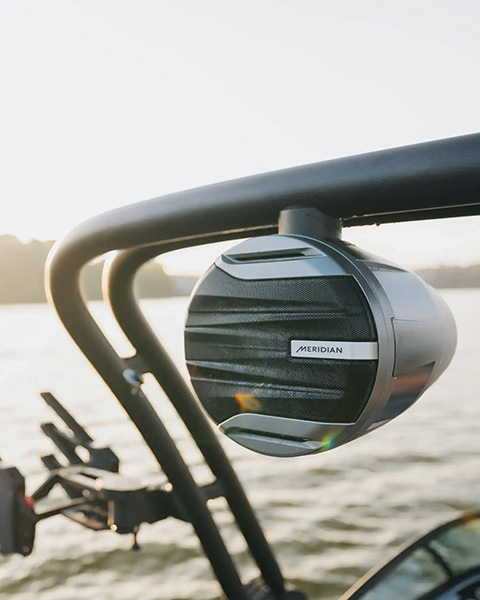
2026 X24When MasterCraft redesigned the X24 for its completely rebuilt 2026 model year lineup, the audio system wasn’t an afterthought — it was a headliner. The new SoundStage Audio system, developed in partnership with Meridian, brings audiophile-grade sound to the cockpit of the industry’s best-selling wake boat platform. Meridian, the British high-end audio brand with decades of studio and luxury automotive work behind it, tuned the system specifically for the X24’s open-cockpit acoustic environment, addressing the frequency compromises that plague most marine audio. Paired with keyless digital ignition, a new standard Z9 Power Tower with powered functionality, and a reengineered hull for improved wake performance, the 2026 X24 arrives as a comprehensive package. SoundStage is a fleet-wide element across the 2026 MasterCraft lineup. For more information, visit www.mastercraft.com.
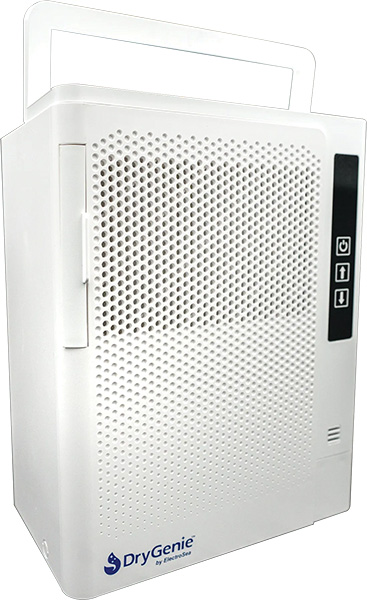 DRYGENIE
Smart Onboard DehumidifierHumidity is the quiet enemy of every boat’s interior — swelling teak, corroding electronics, breeding mold in upholstery, and turning a closed cabin into a musty box by mid-summer. ElectroSea’s DryGenie debuted at the 2025 Fort Lauderdale International Boat Show on the strength of raw pulling power: the manufacturer rates it at up to three liters of water removed per day, roughly triple what a unit its size usually manages. A pair of suction-cup
feet anchor it to whatever flat surface is available, an automatic tilt shutoff kills the unit if it ever gets knocked over (a real possibility on a boat that’s underway or rocking at a mooring), and it remembers its last settings through a dockside power blip, so nobody has to climb below and reset it after the boat sat unattended for a week. None of that matters much to a runabout stored in a heated garage over winter, but it’s a different story for a sport-fishing boat running bait tanks, soaked rod lockers, and gear bags all season long — exactly the conditions that turn a closed cabin musty in a hurry. At $299 USD, it undercuts most marine-rated compressor dehumidifiers by a wide margin. For more information, visit www.electrosea.com/drygenie.
Get Your Product in the Hands of Our Readers
Are you a brand or company with a product you’d love our audience to discover? We are always searching for the latest and greatest items to feature in our upcoming issues and editorial round-ups. If you have a product you would like our editorial team to review, test, or feature, we want to hear from you!
Email: ads@powerboating.com (Please include the product name, category, and why you think it’s a great fit for our readers.)