
Few People Know How the World’s Highest Lift Lock Really Works?
By Capt Bill Jennings
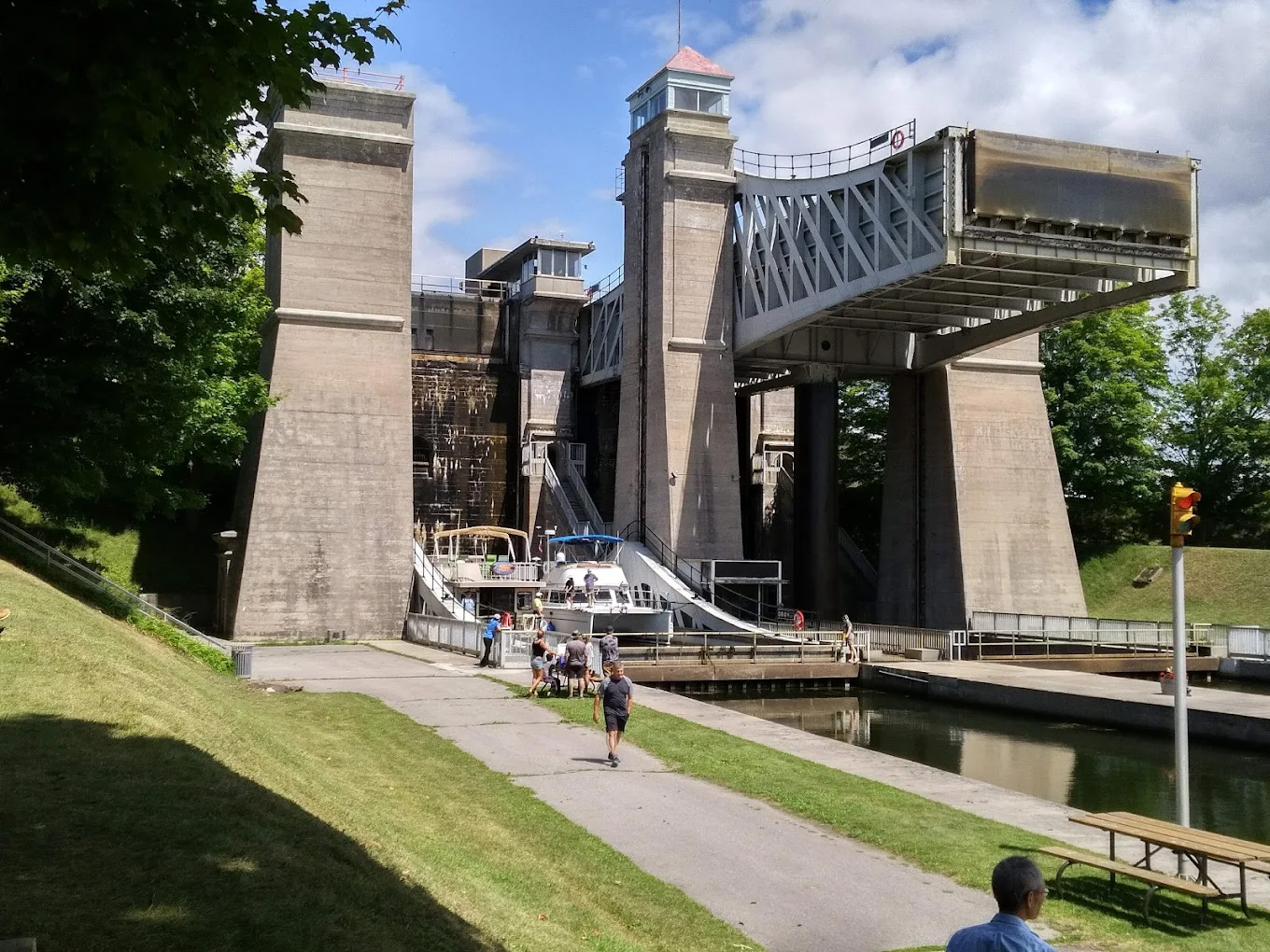
How does the world’s highest lift lock actually raise and lower multiple cruisers at a time? It is a truly amazing process and not one that you might suspect.
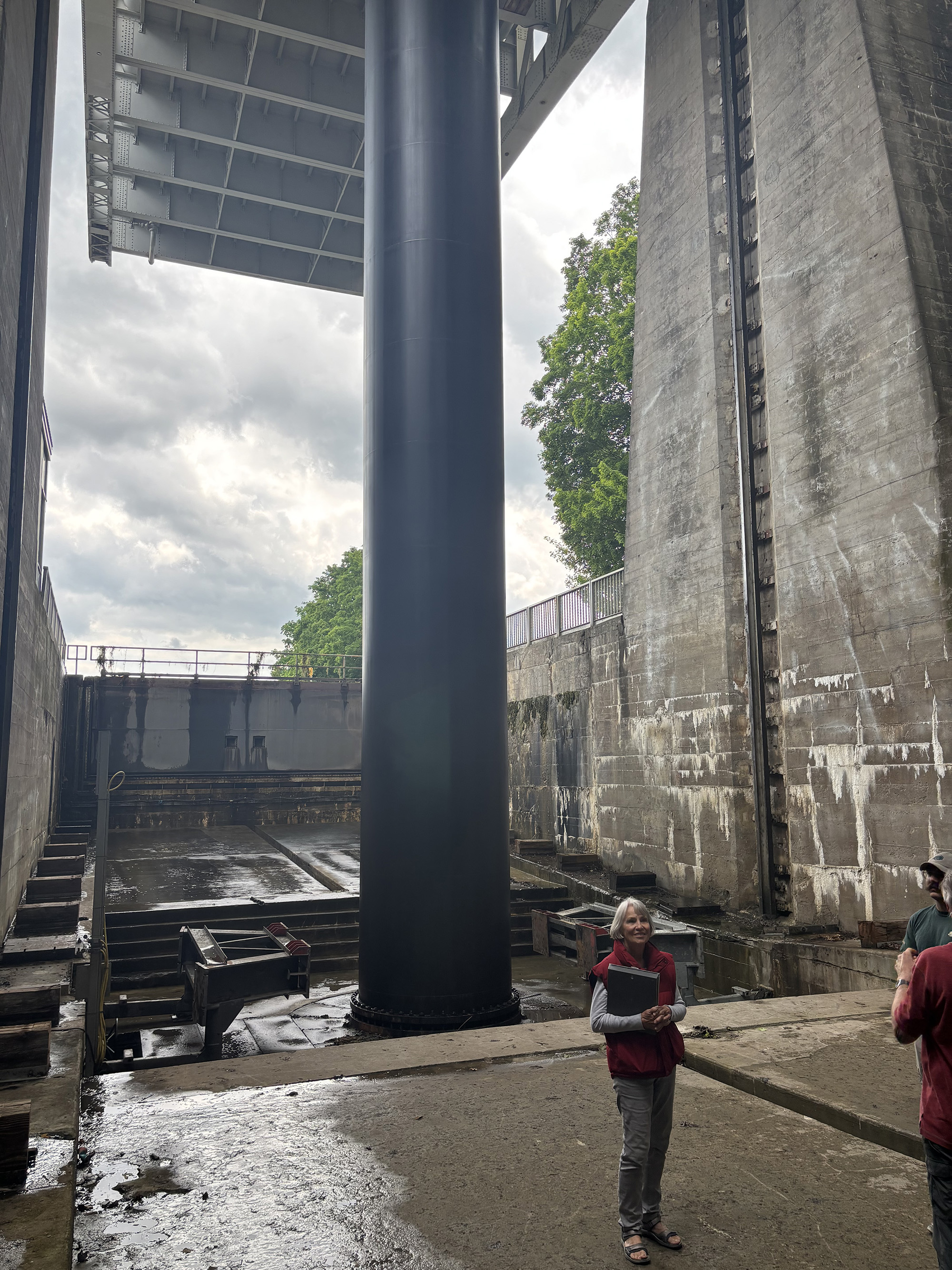
I am speaking about the Peterborough, Ontario, Hydraulic Lift Locks on the Trent Canal. What you see as an observer is two huge, identical tubs, each one 144 feet long and 33 feet wide. One tub is in the raised position for the lock and the other is at the bottom position. Beneath each tub is a super sized ram, 7.5 feet in diameter, that supports the tub above it. The lock masters order the boats waiting to be raised or lowered into the appropriate tub. Once secured, you see one tub move down and the other up, until they have reversed their original position. What you don’t see as a casual observer, is how this remarkable transition actually works and this is the ingenious mechanism behind the locks operation.
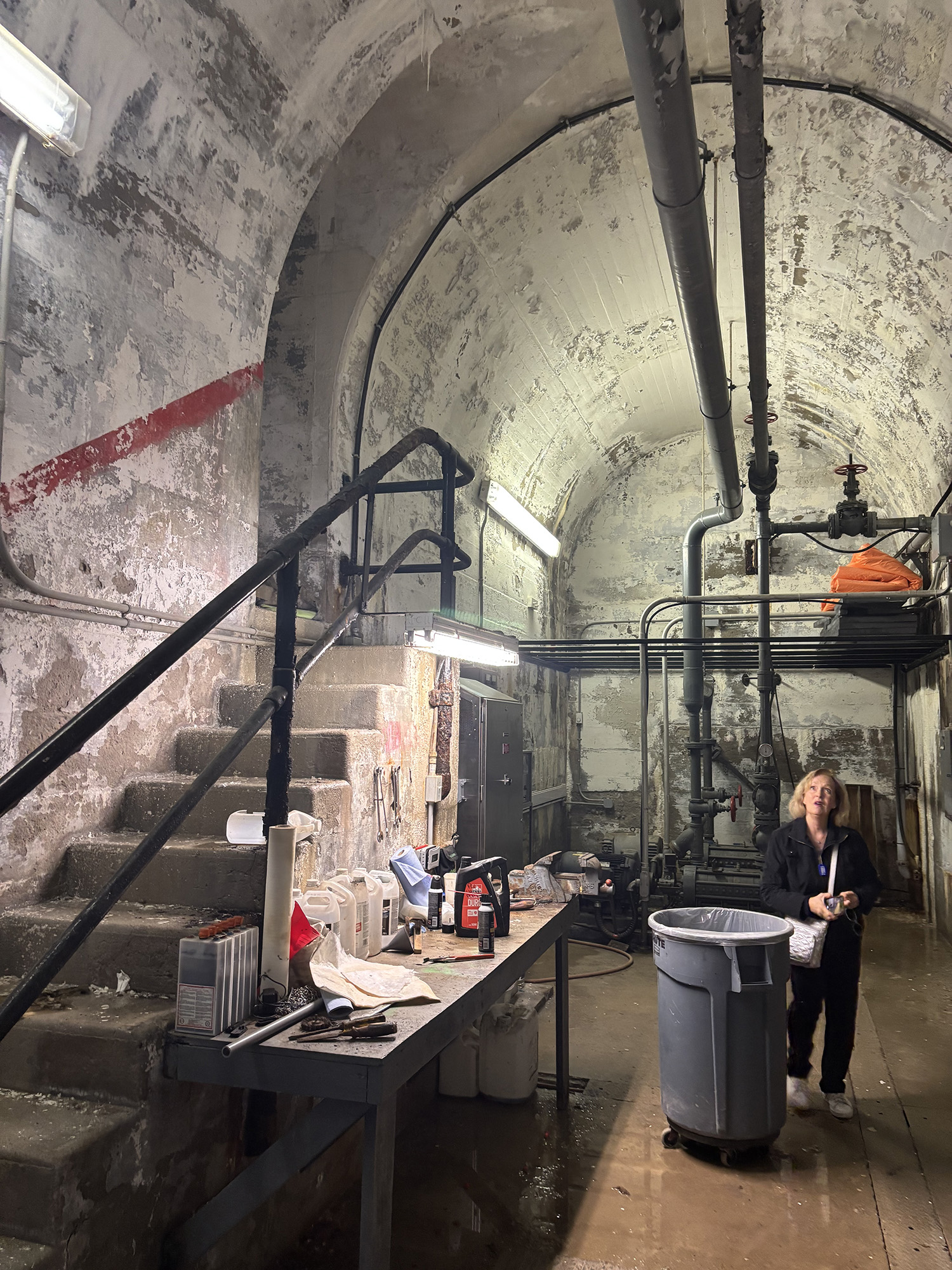
Here is the secret. When the gates at the end of each tub open, to allow the transitioning boats to enter, they also allow 1,844 tons of water to enter. Once the boats are secured in their tub, the gates close. Then 144 tons of extra water is added to the upper tub. This is the amount of water calculated to provide the added weight that allows gravity alone to pressure the upper tub downward and lift the lower tub.
When a crossover valve in the connecting pipe between the two ram shafts is opened, the upper tub, which is 144 tons heavier, simply pushes down until it has reached the bottom. The water passing through the crossover valve pushes the opposite tub upwards. The crossover water pressure is 580 psi and is controlled to raise the tub that was on the lower side, to the full up side in exactly 90 seconds.
 The question that people ask is, “What about the weight of the boats that entered each tub? Does that not throw off the calculations?” This is where good old Professor Archimedes enters the picture. If you’ll recall, his famous principle tells us that when a boat enters a full tub, they displace a weight of water out of the tub, exactly the same weight as their own boat weight – – so when the boats enter the tub, the tub weight remains the same. The total weight calculation is not affected by the boats entering the tub, because the weight of the water that is spilled from the tub, equals the weight of the boats that entered. No external power is applied and the Peterborough lift lock operates with gravity alone. This is the most interesting fact about these world famous locks.
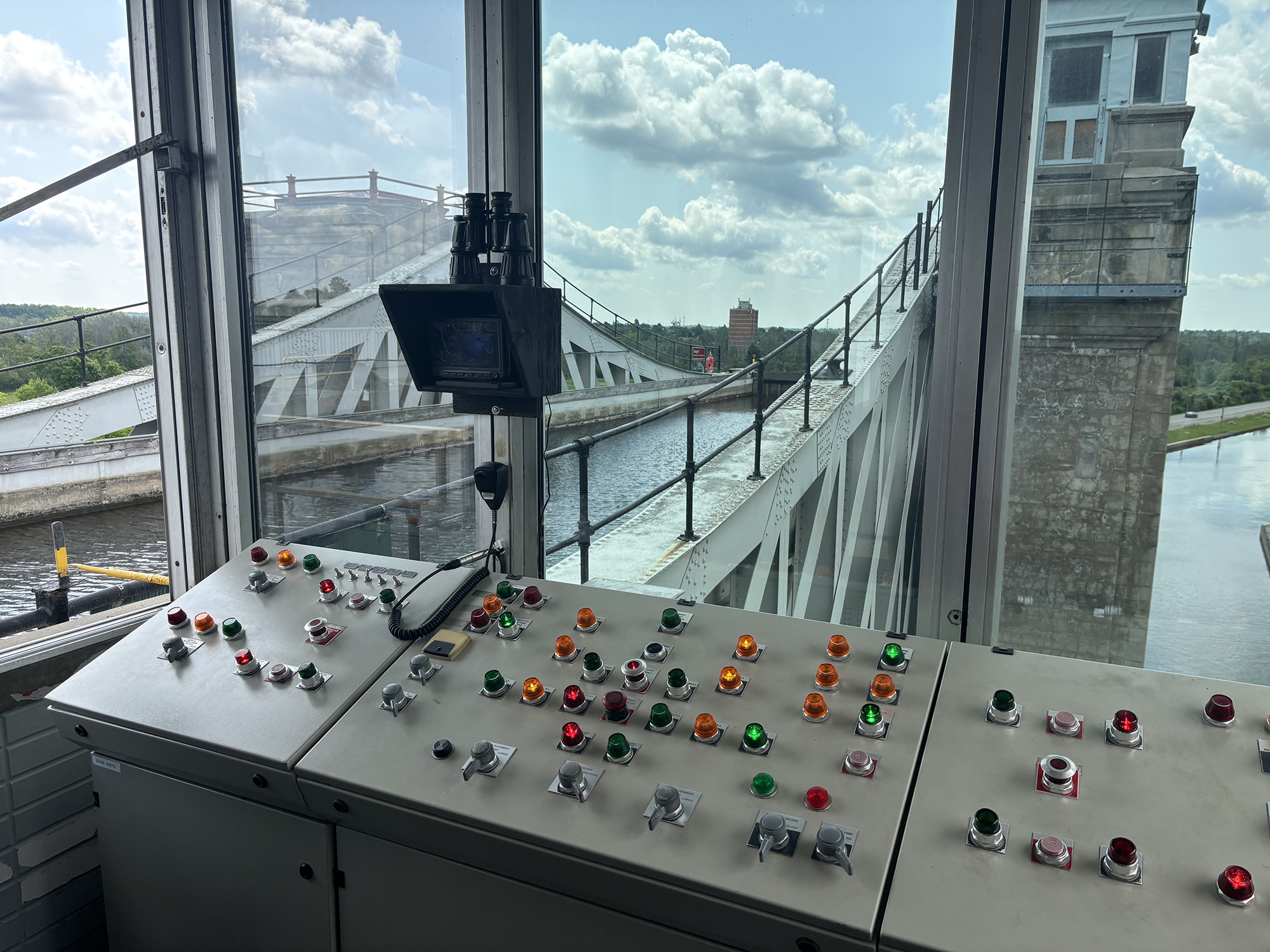
Perhaps your boat is one of the 3,000 a year that have been lifted 65 feet vertically through these locks since they opened in 1904. Since that time to present day, the locks have retained sufficient original parts to continue their designation as a national historic site. The construction statistics are impressive. For example, the ‘breast wall’ that holds back the upper canal is 26,000 yards cubed of Portland Cement, 80 feet high and 40 feet thick. Each tub, including the water, weighs 3.4 million pounds.
A few years ago, site engineers figured it was time to check the structure’s strength. They were shocked to learn that the cement was still curing and there was zero danger of failure. The summer of 2025 boaters were offered an exceptional opportunity to not only visit the Peterborough Lift Locks, but to take your own boat through them absolutely free. It was Parks Canada special offer. You can boat the entire Trent Canal System, or just do a section. Just be sure you include the Peterborough lift.
For more information please visit:
https://parks.canada.ca/lhn-nhs/on/trentsevern
https://parks.canada.ca/lhn-nhs/on/trentsevern/activ/eclusez-pagayez-lock-paddle
Keyword : Hydraulic Lift Locks, Parks Canada, Peterborough Hydraulic Lift Locks, Peterborough Lift Locks, Trent Canal Hydraulic Lift Locks, Parks Canada, Peterborough Hydraulic Lift Locks, Peterborough Lift Locks, Trent Canal